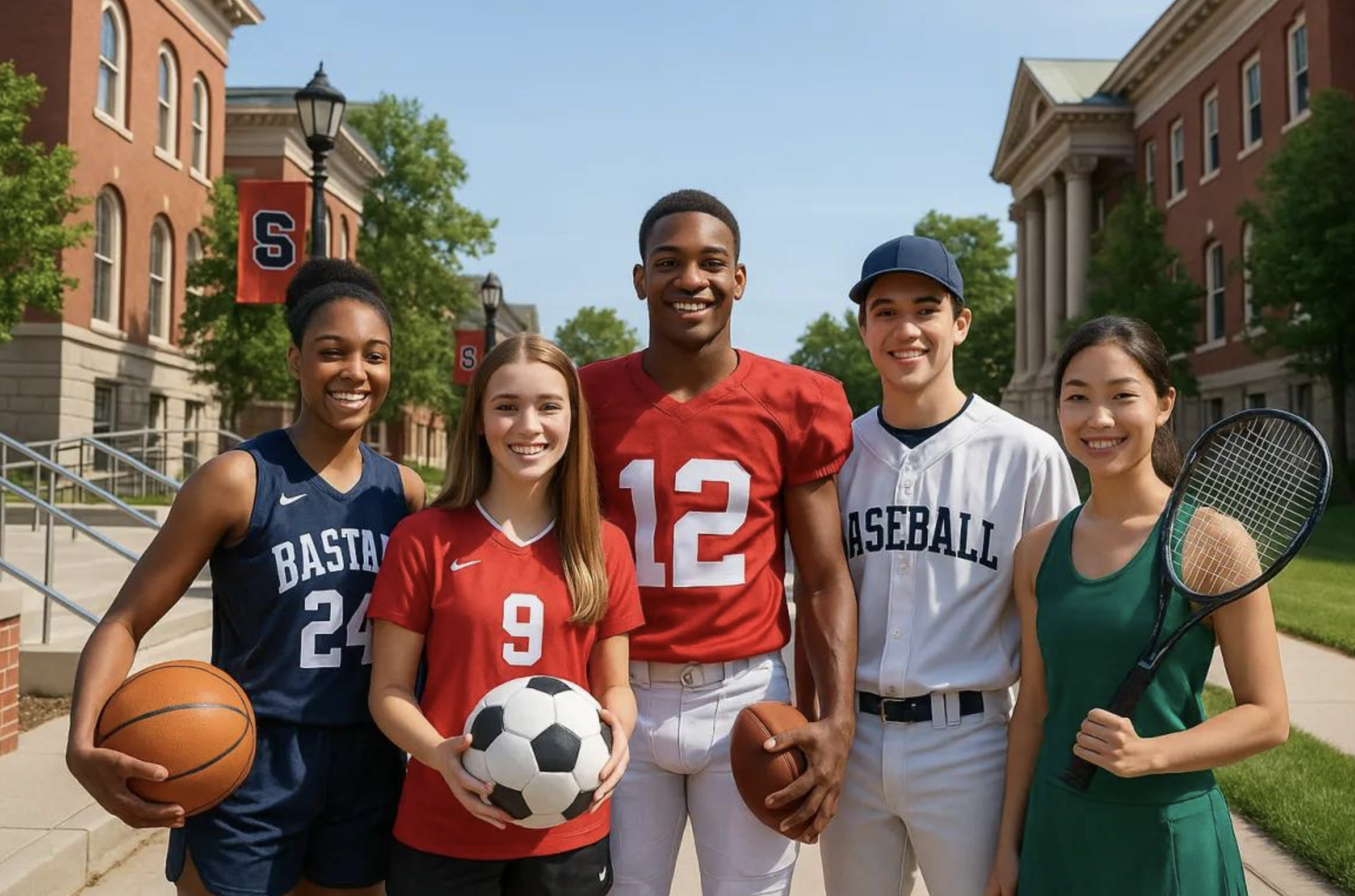
Dreaming of playing college sports in the United States while earning a degree? An athletic scholarship could help make that dream a reality.
Every year, colleges and universities across the United States provide athletic scholarships to talented student-athletes. These scholarships can help cover tuition, accommodation, meals, and other educational expenses.
However, earning a scholarship involves more than being a great athlete. Understanding the recruiting process, academic requirements, scholarship opportunities, and how to communicate with college coaches can significantly improve your chances.
In this guide, we'll explain how athletic scholarships work, who can qualify, and what steps you can take to maximize your opportunities.
1. What Is an Athletic Scholarship?
An athletic scholarship is financial assistance awarded to a student-athlete based on athletic ability and potential contribution to a college sports program.
Unlike academic scholarships, which primarily recognize academic achievements, athletic scholarships are generally awarded through college athletic departments, with coaches playing an important role in recruiting and scholarship decisions.
Depending on the institution and athletic program, scholarships may cover:
Tuition and mandatory university fees
On-campus housing and meals
Books and educational materials
Other eligible education-related expenses
Some athletes receive substantial financial support, while others receive partial scholarships that cover only a portion of their college expenses.
Important: Not every college offers athletic scholarships, and receiving an athletic scholarship is never guaranteed.
2. Types of College Athletic Scholarships
There are several scholarship opportunities available to student-athletes in the United States.
NCAA Scholarships
NCAA institutions compete across Divisions I, II, and III. Divisions I and II can offer athletic scholarships, subject to applicable rules and institutional decisions. Division III does not award scholarships based on athletic ability, although academic and need-based financial aid may be available.
NAIA Scholarships
The NAIA provides opportunities at smaller colleges and universities. NAIA institutions can award athletic financial aid, and many recruit international athletes.
Junior College Scholarships
Many NJCAA programs offer athletic scholarships, depending on their division. Junior colleges can provide a pathway for athletes who want to develop their skills, improve academically, and potentially transfer to a four-year university.
3. Full Scholarships vs. Partial Scholarships
One of the biggest misconceptions about college recruiting is that every talented athlete receives a full scholarship.
In reality, scholarship packages vary significantly.
Scholarship type | What it means |
|---|---|
Full scholarship | Covers the full set of expenses included in the award, potentially tuition, fees, housing, meals, and other eligible costs |
Partial scholarship | Covers only part of the athlete's educational expenses |
Academic scholarship | Financial support based on academic achievement |
Need-based financial aid | Assistance determined by financial circumstances and institutional eligibility |
Some universities allow eligible students to combine different forms of financial assistance, subject to institutional and athletic-association rules.
For example, an athlete might receive a partial athletic scholarship and additional academic aid, reducing the total amount their family must pay.
Tip: Always ask the college for a written breakdown of the total annual cost, scholarships, and remaining expenses before accepting an offer.
4. What Do College Coaches Look for?
College coaches evaluate more than athletic performance.
Although sports ability is essential, coaches also consider whether an athlete will succeed academically, fit into the team, and contribute positively to the program.
Key factors include:
Athletic performance: Coaches evaluate your statistics, competition level, technical skills, physical abilities, and development potential.
Academic performance: Your grades, academic preparation, and eligibility are important. Strong academics can also create additional financial aid opportunities.
Character and attitude: Coaches value athletes who demonstrate discipline, teamwork, coachability, and commitment.
Recruiting profile: A complete athlete profile makes it easier for coaches to review your background, athletic achievements, academic information, and videos.
Communication: Athletes who communicate professionally and demonstrate genuine interest in a university can make a stronger impression.
5. How to Increase Your Chances of Receiving a Scholarship
There is no guaranteed formula for receiving a college athletic scholarship, but taking the right steps can make a significant difference.
Step 1: Build a Professional Athlete Profile
Include your sport, position, graduation year, height, athletic statistics, academic results, achievements, and contact information. Keep everything accurate and updated.
Step 2: Create a High-Quality Highlight Video
A good highlight video helps coaches evaluate your abilities even when they cannot watch you compete in person. Show your strongest plays early and clearly identify yourself.
Step 3: Contact College Coaches
Research universities that match your academic and athletic level. Send personalized emails introducing yourself, explaining your interest, and linking to your recruiting profile.
Step 4: Maintain Strong Academic Results
Good grades can increase your college options and potentially qualify you for additional scholarships. Understand the eligibility requirements for your chosen athletic association.
Step 5: Attend Relevant Showcases and Camps
Camps and showcases can provide opportunities to demonstrate your abilities. Choose events that are appropriate for your level and attended by programs you are interested in.
6. Can International Athletes Receive Athletic Scholarships?
Yes! International student-athletes can qualify for athletic scholarships at many American colleges and universities.
Athletes from Europe, Asia, Africa, South America, and other regions compete in American college sports.
However, international applicants should understand several additional requirements.
Academic documents
International students may need to provide transcripts, proof of graduation, and translated academic records. Some institutions or eligibility organizations may require credential evaluations.
English-language requirements
Universities may require international applicants to demonstrate English proficiency through tests such as TOEFL, IELTS, or other accepted qualifications. Requirements vary by institution.
Athletic eligibility
The NCAA, NAIA, and NJCAA have different eligibility rules. Previous professional participation, compensation, competition history, and academic background can affect eligibility.
Student visa
International students generally need an appropriate student visa, commonly an F-1 visa, to study in the United States. Admission, immigration documentation, and financial requirements must be satisfied.
Receiving an athletic scholarship does not automatically guarantee admission, athletic eligibility, or a student visa.
7. How Much Athletic Scholarship Money Can You Receive?
The amount depends on several factors, including:
The college and athletic division
Your sport and the team's available financial aid
Your athletic ability and recruiting value
The institution's scholarship policies
Other academic or financial aid you qualify for
There is no universal scholarship amount that applies to every sport or division.
For example, one university might offer an athlete substantial financial assistance, while another may offer a smaller athletic award combined with academic aid.
Also, NCAA Division I scholarship rules have undergone significant changes, including the move away from sport-specific scholarship limits for participating institutions under the newer roster-limit framework. Athletes should verify the rules that apply to each institution and season.
Remember: The most important figure is not simply the advertised scholarship amount. It is how much you will actually need to pay after all eligible financial assistance has been applied.
8. Common Athletic Scholarship Mistakes
Many athletes unintentionally reduce their recruiting opportunities by making avoidable mistakes.
Waiting too long: Starting your recruiting research early gives you more time to explore schools and understand eligibility rules.
Contacting only top-ranked universities: A realistic college list should include institutions that match your current athletic and academic abilities.
Ignoring academics: Athletic talent does not eliminate academic admission or eligibility requirements.
Sending generic emails: Coaches are more likely to appreciate thoughtful communication that explains why you are interested in their particular program.
Having an incomplete profile: Missing statistics, videos, graduation information, or academic details can make evaluating an athlete more difficult.
Assuming every offer is a full scholarship: Always clarify exactly what an offer covers, how long it lasts, and the conditions for renewal.
9. When Should You Start Looking for Scholarships?
Athletes benefit from beginning their preparation before their final year of high school.
A suggested preparation timeline is:
School year | Recommended action |
|---|---|
Grade 9 | Focus on development, academics, and understanding college sports |
Grade 10 | Build your athlete profile, collect video footage, and research universities |
Grade 11 | Identify suitable programs, contact coaches when permitted, and attend relevant events |
Grade 12 | Continue communication, complete applications, review offers, and finalize eligibility requirements |
These are general planning recommendations, not official NCAA recruiting contact dates. Recruiting communication rules vary by sport, division, and circumstances.
10. How CollegeSportMatch Can Help You Explore Scholarship Opportunities
Finding the right college requires research, preparation, and communication.
CollegeSportMatch is being developed to help student-athletes connect with college sports opportunities and make the recruiting process easier to navigate.
Through the platform, athletes can work toward:
Creating a professional athlete recruiting profile
Showcasing their athletic achievements and highlight videos
Discovering universities and athletic programs
Exploring recruiting opportunities and events
Connecting with college coaches and recruiters
Learning about scholarship opportunities and eligibility requirements
Rather than focusing exclusively on the biggest universities, athletes should explore programs that fit their abilities, educational goals, and personal preferences.
Final Thoughts: Your College Scholarship Journey Starts With Preparation
Receiving an athletic scholarship can be an exciting opportunity to combine competitive sports with higher education.
However, athletic talent alone is not enough.
Successful recruiting requires preparation, strong academic performance, a professional recruiting profile, realistic college selection, and consistent communication.
Whether you're a soccer player, baseball player, basketball player, swimmer, tennis player, or athlete in another sport, taking the right steps early can help you discover more opportunities.
Your next opportunity could be closer than you think.
Start building your recruiting profile and explore your college sports future with CollegeSportMatch.