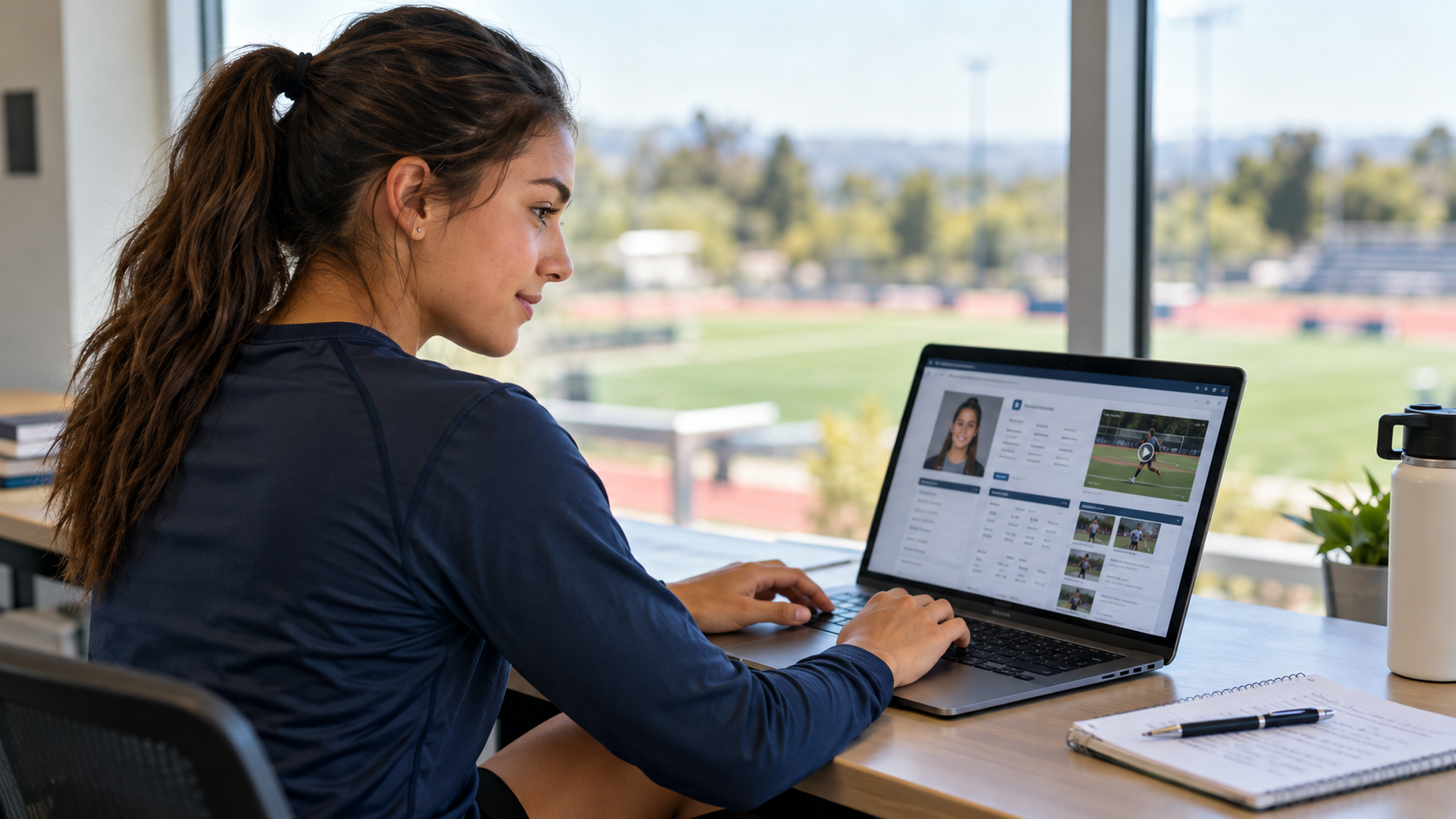
An athlete profile introduces you to coaches and recruiters. It brings together your sporting experience, academic information, achievements and video so someone can understand where you are now and what you want to do next.
A useful profile is clear, accurate and easy to review. Here is how to build one that you can confidently share during your college recruiting journey.
Start With the Essential Information
Make it easy for a coach to identify your sport, current level and expected college entry year.
Include:
Your name and country.
Your sport and position, where relevant.
Your main events or disciplines for individual sports.
Your current school, club or team.
Your expected graduation year and intended college entry year.
Relevant physical measurements, with clearly labeled units.
For sports such as tennis or swimming, describe your discipline, events or playing characteristics rather than trying to select a team position.
Check that your information is consistent across your profile, recruiting emails and applications.
Write a Short Athlete Bio
Your bio should explain your sporting background, strengths and goals. Use specific details instead of phrases such as “the best player” or “a future superstar.”
Describe the level at which you compete, the skills you are developing and what you hope to study.
Example athlete bio:
I am a 2028 graduate who plays as a central midfielder for my school and club teams. My strengths include passing, maintaining possession and supporting the team defensively. I am working to improve my decision-making under pressure and would like to study business while continuing my development in college soccer.
Use this as a starting point and replace the details with your own experience. Your bio should sound like you and accurately reflect your abilities.
Include Statistics That Match Your Sport
Choose statistics that help someone understand your performance. The right information will depend on your sport and role.
Sport | Examples of useful information |
|---|---|
Soccer | Position, appearances, minutes played, goals and assists |
Baseball | Position, batting average, on-base percentage and relevant pitching or running measurements |
Basketball | Points, rebounds, assists and shooting percentages |
Track and field | Events, personal bests, competition dates and official results |
Tennis | Rankings or ratings, the relevant ranking system, tournament results and playing record |
Give your results context. State the season, competition level and number of games or events involved. Label measurements with their units and include official result links where available.
Use verified information whenever possible. If a result is an estimate or an unofficial training measurement, identify it clearly.
Add Your Academic Information
Your academic interests help a coach understand which colleges may suit you. Include your current school, expected graduation date, subjects of interest and intended area of study.
If you include grades or a GPA, identify the grading scale. International athletes should present their school’s grading system clearly and follow the relevant institution’s instructions for any required conversion.
Academic and athletic eligibility requirements vary by association and division. For NCAA opportunities, review the requirements that apply to your intended division and work with your school counselor or the college’s compliance office.
Complete any required college applications and eligibility registrations separately from your recruiting profile.
Share Video That Is Easy to Evaluate
A highlight video should help a coach see your skills in action.
Start with relevant footage, identify yourself clearly and keep editing simple. Show actions that matter for your position or event, rather than relying only on impressive-looking moments.
For team sports, include enough context to show your decisions, movement and contribution to play. Keep full-game footage available if a coach requests it.
Test your video links before sharing your profile. Make sure someone else can open them without needing your login or special access permission.
Use a Clear Photo and Professional Contact Details
Choose a recent photo that accurately represents you. A well-lit headshot with a simple background makes your profile easy to recognize.
Keep your recruiting contact information current and check your messages regularly. Share transcripts and other personal documents through appropriate private channels when requested.
If you include a coach as a reference, ask their permission before sharing their contact details.
Keep Your Profile Updated
Your profile should develop as you do.
Update it when you have new results, a recent video, an academic change or a different team. Review your bio and goals periodically, and remove links that no longer work.
Before sending your profile to a coach, check the details, spelling and video access. A clear, current profile gives the coach a useful starting point for a recruiting conversation.
Create your free athlete profile on CollegeSportMatch and bring your sporting achievements, academic information and video links together.