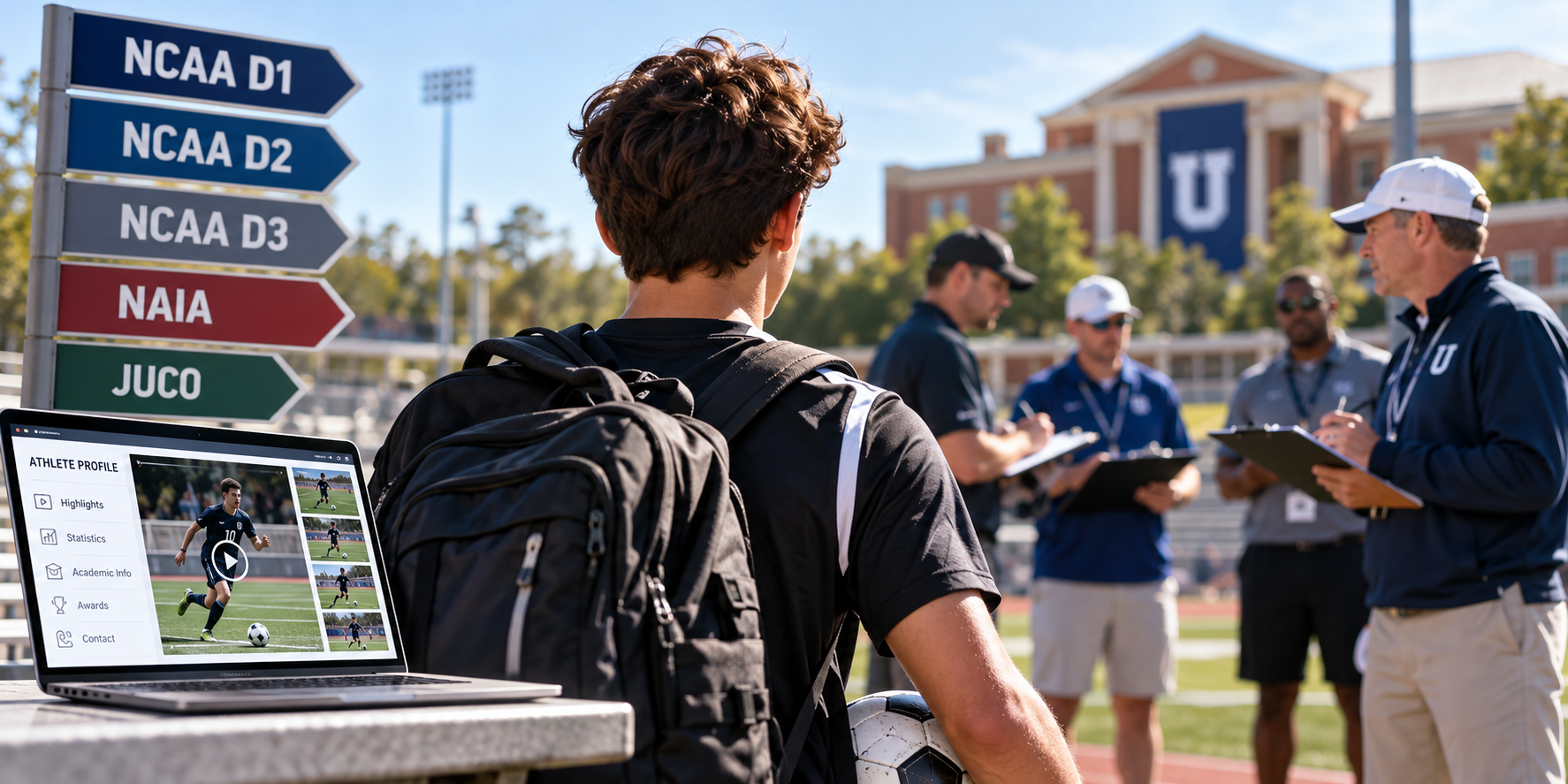
7 Common Recruiting Mistakes
Finding a college team takes preparation. Coaches need accurate information about your athletic ability and academics, while you need to understand which programs fit your goals.
Whether you are starting your college search or already contacting coaches, avoiding these seven mistakes can help you approach recruiting with a clearer plan.
1. Waiting for Coaches to Discover You
Creating a profile or posting a highlight video is a useful start. You should also take an active role in researching programs and introducing yourself.
What to do instead: Build a list of suitable schools, complete their recruiting questionnaires and prepare personalized messages. Ask your current coach to help you assess your playing level and identify realistic opportunities.
Check the recruiting rules for your sport and division before planning contact. NCAA rules can affect when and how college coaches communicate with prospective athletes.
2. Sending the Same Email to Every Coach
A generic message gives a coach little reason to understand why you are interested in their program. Using the wrong coach’s name or mentioning another school can also make your outreach look careless.
What to do instead: Research each program and include a specific reason for your interest. Introduce yourself with your sport, position where relevant, graduation year and current school. Add links to your athlete profile and video.
Keep the message concise, proofread it and make your contact details easy to find.
3. Leaving Your Athlete Profile Incomplete
An outdated profile can leave important questions unanswered. Missing academic information, old statistics or broken video links make it harder for a coach to assess you.
What to do instead: Keep your profile current with relevant athletic results, academic information, graduation year and contact details. Identify the season, competition level and units used for your statistics.
Be accurate. Do not exaggerate achievements or present estimates as verified results. Review your profile whenever you have meaningful updates.
4. Creating a Highlight Video That Is Difficult to Evaluate
Long introductions, unclear footage and clips that do not identify you can make a video harder to follow. A coach needs to see the actions that matter for your sport and role.
What to do instead: Begin with relevant footage, clearly identify yourself and use clips that show your skills in context. Keep editing simple so the action remains visible.
Test the video link before sharing it. Have full-game footage or additional examples available if a coach requests them.
5. Ignoring Academics and Eligibility Requirements
Athletic performance does not replace academic preparation. College admission and athletic eligibility are separate requirements, and the process can differ between associations and divisions.
What to do instead: Protect your study time and check requirements early with your school counselor, the relevant eligibility organization and the college’s admissions or athletics compliance office.
For international athletes, allow time to collect academic records and arrange translations or credential evaluations where required. NCAA and NAIA pathways have their own processes, so check the requirements that apply to your situation.
6. Focusing Only on Famous Schools
Restricting your search to a few well-known programs can cause you to overlook colleges that suit your athletic development, education and budget.
What to do instead: Explore several competitive levels, including NCAA divisions, NAIA programs and junior colleges where appropriate.
Compare each school’s academic courses, team needs, coaching environment, location and total cost. Ask your current coach for an honest assessment of your options. Keep an ambitious target, but build a wider list of programs you would be happy to attend.
7. Treating Interest as a Confirmed Offer
An encouraging email, recruiting questionnaire or camp invitation is a reason to continue the conversation. It does not, by itself, confirm admission, a roster place or a scholarship.
What to do instead: Ask clear questions about what the coach is offering and what steps remain. Request written details of any financial aid, including the amount, conditions and costs you would still need to cover.
Track your conversations, respond professionally and follow up respectfully. Keep exploring other suitable options while you clarify an opportunity.
Build a Profile You Can Share With Confidence
Start with accurate information, a clear video and a realistic school list. Update your materials regularly so you are ready when an opportunity develops.
Create your free athlete profile on CollegeSportMatch and keep your athletic achievements, academic information and video links together.