Category: College Recruiting Guide
Reading Time: 9–11 minutes
Audience: High School Athletes, International Athletes, and Parents
Introduction
Every year, thousands of student-athletes dream of continuing their athletic careers at a college or university in the United States. But one of the most common questions athletes and parents ask is:
How do college coaches actually find and recruit athletes?
Many athletes believe that if they perform well enough, college coaches will automatically discover them. Unfortunately, the recruiting process is rarely that simple.
College recruiting is a combination of athletic performance, academic achievement, communication, exposure, eligibility, and timing.
Understanding how the process works can significantly improve your chances of finding the right college athletic opportunity.
In this guide, we'll explain how colleges recruit athletes, what coaches evaluate, when recruiting begins, and what you can do to get noticed.
1. How Does College Athletic Recruiting Work?
College athletic recruiting is the process through which college coaches identify, evaluate, communicate with, and potentially offer roster positions or athletic scholarships to prospective student-athletes.
Colleges recruit athletes to strengthen their teams, fill specific positions, and build competitive programs.
The recruiting process typically involves six stages:
Stage 1: Identifying Potential Athletes
College coaches begin by searching for athletes who could fit their programs.
They may discover athletes through:
High school competitions and championships
Club and travel teams
Recruiting showcases and camps
Recommendations from coaches and scouts
Recruiting platforms and athlete profiles
Highlight videos and athletic statistics
Direct emails from student-athletes
National and international tournaments
Some coaches actively travel to competitions, while others rely heavily on online recruiting tools and recommendations.
Important: You don't always have to wait for a college coach to discover you. Athletes can take the initiative and contact coaches directly.
Stage 2: Evaluating Athletic Ability
Once a coach identifies a potential recruit, the next step is evaluating whether the athlete meets the team's competitive standards.
Coaches may review game footage, statistics, competition history, physical attributes, and overall athletic potential.
Different sports have different evaluation criteria.
For example:
Soccer: Coaches may evaluate technical ability, speed, tactical awareness, decision-making, positioning, and performance under pressure.
Baseball: Coaches may review hitting statistics, exit velocity, throwing velocity, fielding ability, speed, and game performance.
Basketball: Coaches may evaluate shooting, ball handling, defensive ability, court awareness, athleticism, and decision-making.
Swimming: Coaches often compare verified race times against their team's current performance levels.
Track and Field: Coaches typically evaluate official competition results, personal records, and potential to contribute points at conference championships.
Coaches are not always looking for the athlete with the most impressive statistics. They are looking for athletes who fit the needs of their particular program.
Stage 3: Reviewing Academic Qualifications
Athletic talent alone does not guarantee admission to college.
College coaches must also consider whether an athlete can meet the institution's academic admission requirements and applicable athletic eligibility rules.
Depending on the college and athletic association, relevant factors may include:
High school GPA
Required academic courses
Graduation status
English-language proficiency
Academic transcripts
Standardized test scores, when required
NCAA or NAIA eligibility requirements
Academic requirements differ between institutions and athletic associations.
A student-athlete with strong academic performance may have access to more college options and potentially additional academic scholarship opportunities.
Stage 4: Communicating With Athletes
If a coach believes an athlete may be a good fit, communication can begin through permitted recruiting channels.
Coaches and athletes may communicate using:
Email
Telephone calls
Recruiting platforms
Video meetings
In-person meetings
Official or unofficial campus visits
The timing and type of coach-initiated contact may be restricted by recruiting rules, particularly within NCAA programs.
Athletes should understand that receiving an email from a coach does not automatically mean they have received a scholarship offer or secured a roster position.
It may simply mean the coach wants to learn more.
Stage 5: Campus Visits and Further Evaluation
When mutual interest develops, a college may invite an athlete to visit its campus.
Visits give athletes the opportunity to learn more about the university, athletic facilities, coaching staff, academic programs, and team environment.
There are generally two important types of campus visits in NCAA recruiting:
Official Visit
An official visit is a visit during which the college pays for certain permitted expenses under applicable rules.
Unofficial Visit
An unofficial visit is generally paid for by the athlete or their family, subject to applicable recruiting rules.
During these visits, athletes should evaluate more than the athletic program.
Consider the academic quality, location, campus environment, costs, and whether the university fits your long-term goals.
Stage 6: Offers, Admissions, and Commitment
If a college wants an athlete to join its program, the coach may discuss a roster opportunity, athletic aid, or other available financial assistance.
Depending on the institution and program, an offer may include:
A roster position
Athletic scholarship assistance
Academic scholarships
Other institutional financial aid
A combination of available funding sources
Not every athletic program offers athletic scholarships, and not every recruited athlete receives one.
A coach's expression of interest or verbal offer should not be confused with a final admission decision or a formal financial-aid agreement.
Before committing, athletes should understand the financial terms, admissions requirements, eligibility conditions, and expectations of the program.
2. How Do College Coaches Find Athletes?
One of the biggest misconceptions about recruiting is that college coaches only recruit athletes they see playing in person.
Today, recruiting happens through multiple channels.
Recruiting Platforms
Online recruiting platforms allow athletes to create profiles containing their athletic information, academic background, statistics, and videos.
Coaches can use these profiles to evaluate potential recruits and identify athletes who may fit their programs.
A strong athlete profile should include accurate, updated information and make it easy for coaches to understand what the athlete can offer.
High School and Club Coaches
High school and club coaches often play an important role in recruiting.
College coaches may contact trusted coaches to ask about an athlete's performance, character, discipline, work ethic, and potential.
A recommendation from a respected coach can be valuable, especially when it is supported by video and verified performance information.
Showcases and Recruiting Camps
Recruiting showcases bring athletes together to demonstrate their abilities.
Some events are attended by college coaches, while others focus more on training, evaluation, or exposure.
Before registering for a showcase, athletes should investigate which colleges are expected to attend and whether those programs recruit athletes at their level.
Tip: Attending an expensive showcase does not guarantee recruitment. Choose events that match your sport, ability, age, and recruiting goals.
Direct Contact From Athletes
One of the most effective ways to create recruiting opportunities is to contact college coaches yourself.
Athletes can introduce themselves through a professional email that includes:
Full name and graduation year
Sport and playing position
School or club team
Key athletic statistics
Academic information
Highlight-video link
Athlete recruiting profile
Reason for interest in that college
Coaches receive many recruiting emails, so clear and personalized communication is important.
An athlete may generally initiate an introductory email, but NCAA rules can limit when and how a coach may respond.
3. What Do College Coaches Look for in Athletes?
Athletic ability is extremely important, but it is not the only factor.
College coaches typically evaluate several characteristics.
Athletic Performance
Does the athlete have the skills, physical ability, and competitive experience required for the program?
Academic Performance
Can the athlete meet academic requirements and succeed in college?
Coachability
Does the athlete listen, accept feedback, and demonstrate a willingness to improve?
Work Ethic
Does the athlete consistently train, compete, and demonstrate commitment?
Character and Teamwork
Will the athlete contribute positively to the team's culture?
Position and Team Needs
Does the team actually need an athlete at that position or in that event?
A highly talented goalkeeper, for example, may have fewer immediate opportunities at a college that already has several strong goalkeepers.
This is why finding the right college fit is often more important than contacting only the most famous universities.
4. When Should Athletes Start the Recruiting Process?
There is no single recruiting timeline that applies to every sport or college.
The appropriate starting point depends on the athlete's age, development, graduation year, and the recruiting rules of the relevant athletic association.
Here is a general planning guide.
School Year | Recommended Activities |
|---|---|
9th Grade | Develop athletic skills, maintain good grades, begin researching colleges |
10th Grade | Build an athlete profile, collect videos and statistics, identify potential programs |
11th Grade | Contact appropriate coaches, attend relevant events, compare college options |
12th Grade | Follow up with interested programs, complete applications, confirm eligibility and financial arrangements |
These are preparation recommendations, not official NCAA recruiting contact dates.
Some sports recruit earlier than others, and NCAA recruiting calendars and communication rules vary by sport and division.
Athletes should always check the latest rules for their particular situation.
The earlier you begin preparing, the more time you have to develop your skills, improve your academic record, and identify suitable colleges.
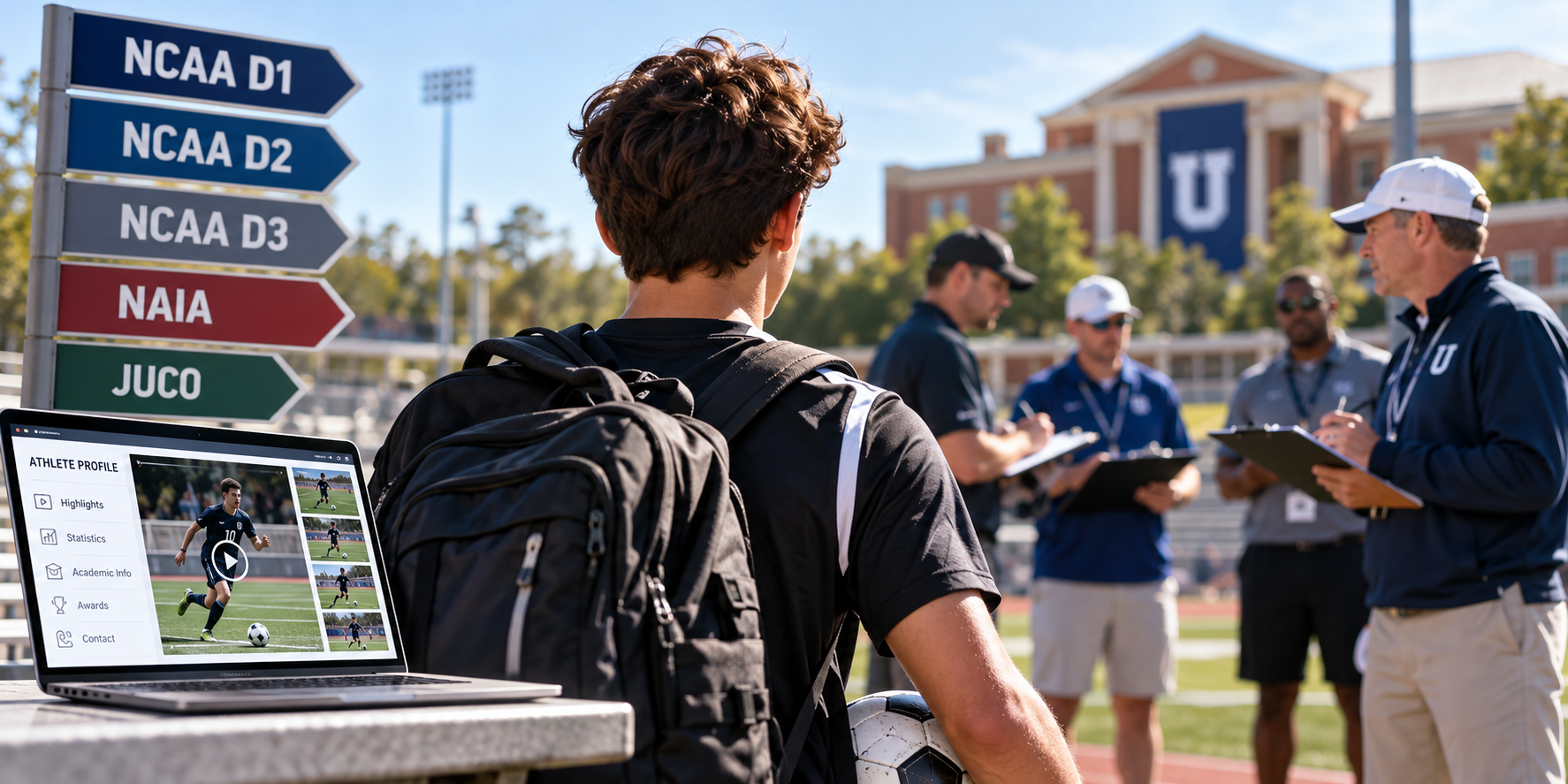
5. Which College Athletic Divisions Recruit Athletes?
The United States offers athletic opportunities across several college sports organizations.
Understanding these options can help athletes avoid limiting their searches.
NCAA Division I
NCAA Division I generally includes institutions with highly competitive athletic programs and significant athletic commitments.
Many Division I programs recruit nationally and internationally.
Athletic scholarships may be available, depending on the sport, institution, roster, and applicable financial-aid rules.
NCAA Division II
Division II offers competitive college athletics with an emphasis on balancing sports, academics, and campus life.
Many Division II programs offer athletic scholarships, including partial awards.
NCAA Division III
Division III institutions do not award athletic scholarships.
However, student-athletes may qualify for academic scholarships, need-based financial assistance, and other institutional aid.
Division III can be an excellent option for athletes who want to combine competitive sports with a strong academic experience.
NAIA
The National Association of Intercollegiate Athletics includes colleges and universities that compete in a separate athletic association.
NAIA schools recruit athletes from the United States and internationally, and athletic scholarships may be available.
NJCAA and Other Junior College Associations
Two-year colleges can provide an alternative pathway for student-athletes.
Junior college athletics may offer opportunities to gain experience, develop academically, and potentially transfer to a four-year institution.
Scholarship availability and eligibility requirements vary by institution, sport, division, and association.
Remember: The best athletic opportunity is not necessarily at the highest division. It is the program where your athletic level, academic goals, finances, and personal preferences align.
6. How Do Colleges Recruit International Athletes?
International athletes are an important part of American college sports.
Colleges recruit players from Europe, South America, Asia, Africa, Australia, and many other regions.
However, international recruiting often involves additional steps.
Athletic Evaluation
International athletes may be evaluated through:
Club competition footage
National team participation
Verified athletic statistics
International tournaments
Recruiting videos
Recommendations from coaches
Online recruiting profiles
Because American coaches cannot attend every international competition, high-quality video and clear athletic information can be particularly important.
Academic Documentation
International athletes may need to provide translated academic transcripts, proof of graduation, and other documents required by the college or athletic eligibility organization.
English-Language Requirements
Some universities require international applicants to demonstrate English proficiency through accepted examinations or other approved methods.
Requirements differ between institutions.
Athletic Eligibility
International athletes must comply with the relevant association's eligibility rules.
These may include requirements relating to academic history, amateurism, previous competition, enrollment, and other circumstances.
Athletes who have played professionally, received certain payments, or signed particular agreements should review their eligibility carefully.
Student Visa
International athletes admitted to an eligible U.S. institution may need to obtain an appropriate student visa, commonly an F-1 visa for qualifying academic programs.
A scholarship or recruiting offer does not automatically provide immigration status.
The institution's designated school official and the relevant U.S. authorities handle the required student-visa documentation and procedures.
7. Do All Recruited Athletes Receive Scholarships?
No.
Being recruited and receiving an athletic scholarship are two different things.
Some athletes receive substantial athletic funding, others receive partial assistance, and some join teams without athletic scholarships.
The amount and type of financial assistance depend on the institution, athletic association, sport, program budget, and individual circumstances.
Potential funding sources include athletic aid where permitted, academic scholarships, need-based assistance, and other institutional awards.
Athletes should ask coaches and financial-aid offices for a written explanation of the costs and assistance available.
A college may offer an attractive athletic opportunity without covering all tuition, housing, meals, insurance, travel, or other expenses.
8. Seven Common Mistakes Athletes Make During Recruiting
Many talented athletes miss opportunities because they misunderstand the recruiting process.
Mistake 1: Waiting for Coaches to Find Them
Coaches may never see your performances unless you actively promote yourself.
Mistake 2: Contacting Only Division I Universities
Limiting your search to a small number of highly competitive programs can reduce your opportunities.
Mistake 3: Having No Highlight Video
Without useful footage, coaches may find it difficult to evaluate your abilities.
Mistake 4: Sending Generic Recruiting Emails
A personalized email explaining why you are interested in a particular program is more effective than sending the same message to hundreds of coaches.
Mistake 5: Ignoring Academic Requirements
Strong athletic performance cannot always compensate for missing academic qualifications.
Mistake 6: Providing Incomplete Athlete Information
Missing statistics, outdated videos, incorrect graduation years, and unclear contact information can make evaluation harder.
Mistake 7: Failing to Follow Up
A coach may not respond immediately. A polite follow-up after a reasonable interval can help keep communication moving.
9. How Can You Increase Your Chances of Getting Recruited?
You do not need to be a nationally famous athlete to begin exploring college opportunities.
A well-organized recruiting strategy can make a meaningful difference.
Step 1: Create a Complete Athlete Profile
Include your athletic achievements, academic information, measurements where relevant, graduation year, playing history, and contact details.
Step 2: Prepare a Strong Highlight Video
Select footage that demonstrates your actual performance in competitive situations.
Keep the video focused, clearly identify yourself, and make sure the footage is recent.
Step 3: Research Suitable Colleges
Compare schools based on athletic level, academic programs, location, costs, and team needs.
Build a realistic list that includes different competitive levels.
Step 4: Contact College Coaches
Introduce yourself professionally and provide a direct link to your recruiting profile and video.
Explain why you believe the college may be a good fit.
Step 5: Keep Your Information Updated
Add new competition results, athletic statistics, achievements, and video footage.
Step 6: Follow Up and Stay Organized
Track which colleges you have contacted, when you sent your messages, and whether coaches have responded.
Step 7: Evaluate Every Opportunity Carefully
Before accepting an offer, understand the admissions requirements, financial commitment, athletic expectations, and eligibility rules.
Recruiting success is not simply receiving attention from a coach.
Real recruiting success means finding a college where you can develop as an athlete, succeed academically, and prepare for your future.
10. How CollegeSportMatch Can Help You Explore Recruiting Opportunities
Finding suitable colleges and connecting with the right programs can be challenging, particularly for athletes who are unfamiliar with the American college sports system.
CollegeSportMatch is being developed to help student-athletes organize their recruiting journey and explore opportunities.
Through the platform, athletes can build a recruiting profile, present their athletic achievements, upload highlight videos, and explore colleges and other relevant sporting opportunities.
The goal is to make it easier for athletes to present themselves professionally and take a more active role in their recruiting process.
Rather than waiting to be discovered, athletes can prepare their information and research programs that align with their goals.
Frequently Asked Questions
Can I get recruited without playing for a famous club or high school?
Yes. Coaches may evaluate athletes from many different competitive backgrounds. Strong footage, verified results, academic qualifications, and direct communication can help athletes receive consideration.
Can I contact college coaches myself?
Yes. Athletes can generally initiate communication with college coaches, although recruiting rules may restrict when coaches can respond or engage in certain types of communication.
Do college coaches recruit international athletes?
Yes. Many American colleges recruit international student-athletes. International applicants must meet the relevant admissions, athletic eligibility, and immigration requirements.
Can I play college sports without an athletic scholarship?
Yes. Some student-athletes join college teams without athletic scholarships, including at NCAA Division III institutions, where athletic scholarships are not awarded.
How many colleges should I contact?
There is no universal number. A focused list of approximately 20–40 suitable programs can be a practical starting point, but the appropriate number depends on your sport, competitive level, graduation timeline, and responses from coaches.
Does a college coach's interest guarantee admission?
No. Coaches can support recruiting, but prospective student-athletes must still meet the institution's admission requirements and applicable athletic eligibility rules.
What if no college coach responds to my emails?
Review your target schools, email quality, athletic profile, and highlight video. Consider whether you are contacting programs that realistically match your level. Follow up politely and continue exploring additional colleges.
Final Thoughts: Take Control of Your Recruiting Journey
College athletic recruiting is not only about talent.
It is also about preparation, communication, academics, exposure, and finding the right opportunity.
College coaches recruit athletes through competitions, recommendations, showcases, recruiting platforms, videos, and direct communication.
The most successful recruiting approach is proactive and realistic.
Start early, build a strong athletic profile, research colleges carefully, and communicate professionally with coaches.
Your next opportunity could begin with a single introduction.
Ready to Start Your College Recruiting Journey?
Create your athlete profile, showcase your abilities, and begin exploring college sports opportunities with CollegeSportMatch.
CollegeSportMatch — Your Talent. Your Future. Your Opportunity.
Disclaimer: Recruiting, scholarship, and eligibility rules differ by athletic association, sport, division, institution, and academic year. Always confirm current requirements with the relevant college, NCAA, NAIA, NJCAA, or other governing organization. CollegeSportMatch does not guarantee recruitment, admission, roster placement, or scholarships.